

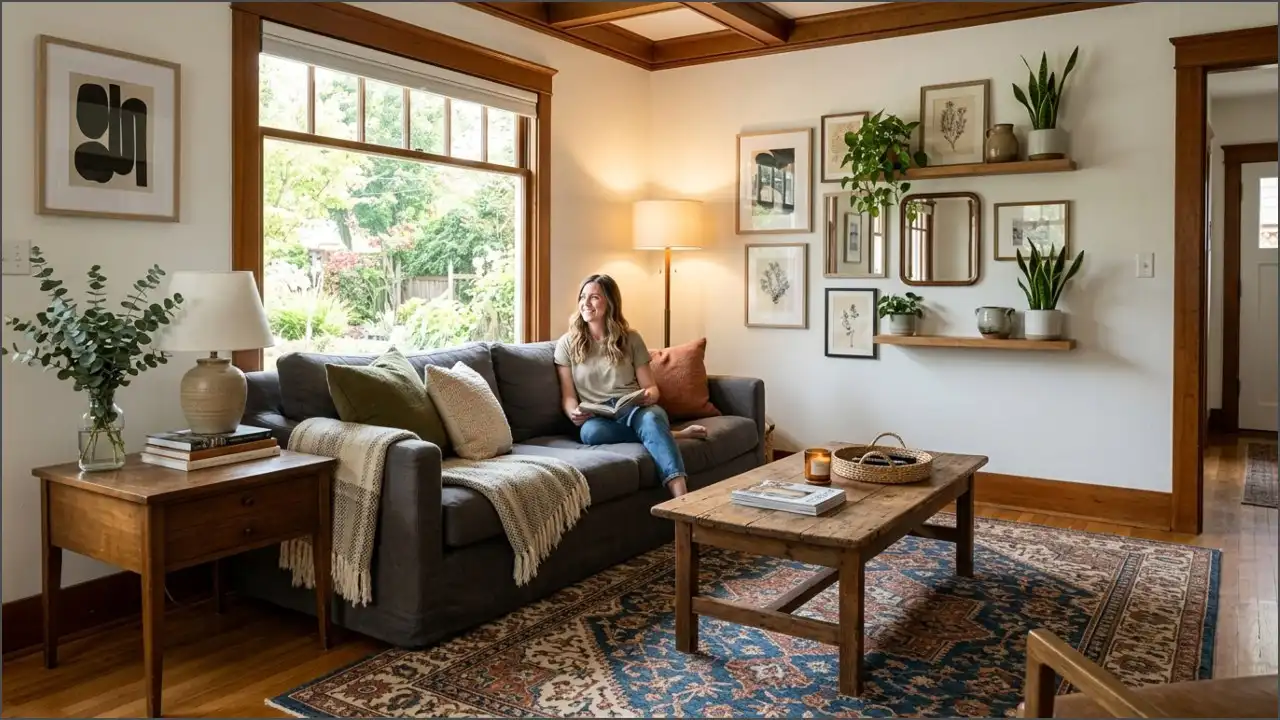
Ask ten people what interior design actually is and most will describe picking paint colors or arranging cushions. That answer is not wrong, it is just incomplete. Anyone searching why interior design is interesting mintpaldecor is usually looking for something deeper than a definition. They want to know what keeps designers, homeowners, and renters coming back to this subject year after year, even when the couch they already bought works fine. This article explains what actually makes the field worth studying, using real design logic rather than repackaged decorating tips.
The Short Answer
Interior design is interesting because it is one of the few disciplines where science, psychology, and personal identity collide inside a space you occupy every single day. A room is not a picture. It is something your body reacts to physically, whether you notice it or not. That reaction is measurable, learnable, and adjustable, which is exactly what pulls people into studying it further.
It Is Built on Physical Rules, Not Just Taste
A lot of decorating content treats design as a matter of opinion. It is not, at least not entirely. Several parts of interior design follow physical and mathematical logic that has been documented for centuries.
The Golden Ratio and Rule of Thirds
Architects and designers have used the golden ratio, roughly 1 to 1.618, since ancient Greece to decide proportions between furniture, wall space, and negative space. You do not need to calculate it with a formula. In practice it shows up as a rule of thumb: a large piece of furniture like a sofa should occupy roughly two thirds of the wall it sits against, not the entire wall and not a small fraction of it. Rooms that violate this without meaning to tend to feel either cramped or oddly empty, and most people cannot explain why until someone points out the math behind it.
Color Temperature Is Measured in Kelvin
Light bulbs are rated on the Kelvin scale, and this rating changes how a room feels regardless of paint color. Bulbs around 2700K to 3000K produce a warm, yellowish light associated with relaxation, which is why bedrooms and living rooms typically use this range. Bulbs at 4000K and above shift toward a cooler, whiter light that mimics daylight, which is why kitchens and home offices often use it for task focus. This is a documented lighting standard used by manufacturers and electricians, not a stylistic preference, and it explains why the same paint color can look completely different depending on which bulbs are installed.
Sightlines and Circulation Paths
Commercial and residential designers map out circulation paths, which are the routes people naturally take through a room. Kitchen designers rely on the kitchen work triangle, a well-established principle that stems from 1940s University of Illinois studies mapping the space between the sink, stove, and refrigerator. Designers keep the total distance between these three points within a functional range of 13 to 26 feet so home cooks avoid unnecessary steps. When homeowners complain about an awkward kitchen, a poorly placed island or appliance usually breaks this essential triangle.
Why Interior Design Is Interesting MintPalDecor Readers Notice Once They Learn the Principles
Trends move fast. Principles do not. This is one of the more overlooked reasons why interior design is interesting mintpaldecor content often skips over in favor of listing seasonal color palettes. Once you understand proportion, lighting temperature, and circulation, you can walk into almost any room, in any style, and immediately identify what is working and what is not, independent of whether the furniture is currently fashionable.
A Practical Comparison
| Approach | What It Relies On | Long Term Result |
|---|---|---|
| Trend following | Current color palettes, viral layouts | Dates quickly, often needs a full redo within a few years |
| Principle based design | Proportion, lighting logic, circulation | Adapts to new furniture and colors without losing function |
A room designed around principles can be redecorated a dozen times over the years and still work. A room designed purely around a trend usually needs to be gutted once that trend fades.
Common Mistakes That Undercut an Otherwise Good Room
- Center pendant lighting as the only light source. A single ceiling fixture creates harsh shadows under eyes and cabinets. Layered lighting, ambient, task, and accent, at three different heights fixes this without a major renovation.
- Rugs sized too small for the seating area. Front furniture legs should sit on the rug, not float off the edge of it, or the room reads as disconnected.
- Matching furniture sets bought as a bundle. Identical wood tones and identical fabric across every piece removes the visual variation that makes a room feel collected rather than staged.
- Ignoring window direction when choosing paint. North facing rooms receive cooler, bluer light and tend to need warmer paint tones to balance it. South facing rooms receive warmer light and can handle cooler tones without feeling sterile.
- Placing artwork at standard eye level for a standing adult, in every room. Museums generally hang art with the center point around 57 to 60 inches from the floor, but that standard assumes people are standing and viewing it from a distance. In a dining room where people are seated, or a hallway that is narrow, that height often needs to drop several inches to feel correct.
Why This Matters Beyond Aesthetics?
Poorly designed spaces create small daily friction that adds up. A kitchen with a broken work triangle makes cooking slower every single day, not just once. A bedroom lit with cool white bulbs at night can interfere with the body’s natural signal to wind down, since light in the blue and white range suppresses melatonin more than warm light does, a mechanism studied extensively in sleep research. None of this requires an expensive renovation to address. It requires knowing which lever to pull.
There is also a resale angle worth knowing. Real estate appraisers and agents commonly note that functional layouts and neutral, well proportioned spaces show better to buyers than heavily trend driven ones, since buyers can picture their own belongings in a space that is not visually loud. This is not a guarantee of a higher sale price, but it is a consistent pattern cited across real estate listing guidance.
How to Start Applying This in Your Own Home
You do not need a professional consultation to begin.
- Walk through one room and check whether your largest furniture piece follows the roughly two thirds wall coverage guideline.
- Check the Kelvin rating on your current bulbs and match it to the room’s purpose, warmer for rest, cooler for focus.
- Measure the distance between your kitchen’s sink, stove, and fridge and see if it falls within a comfortable working range.
- Add a second and third light source at different heights instead of relying on one overhead fixture.
- Size any rug so the front legs of your seating rest on it.
Each of these takes an afternoon, not a renovation budget.
Final Thoughts
The reason so many people stay interested in this subject once they start paying attention is that it is not really about decorating. It is about understanding measurable, repeatable principles, proportion, light, and movement, that shape how a space feels and functions, and then applying personal taste on top of that foundation instead of in place of it. That is the real answer to why interior design is interesting mintpaldecor readers keep searching for, and it holds up whether you are furnishing a first apartment or reworking a house you have lived in for twenty years.