

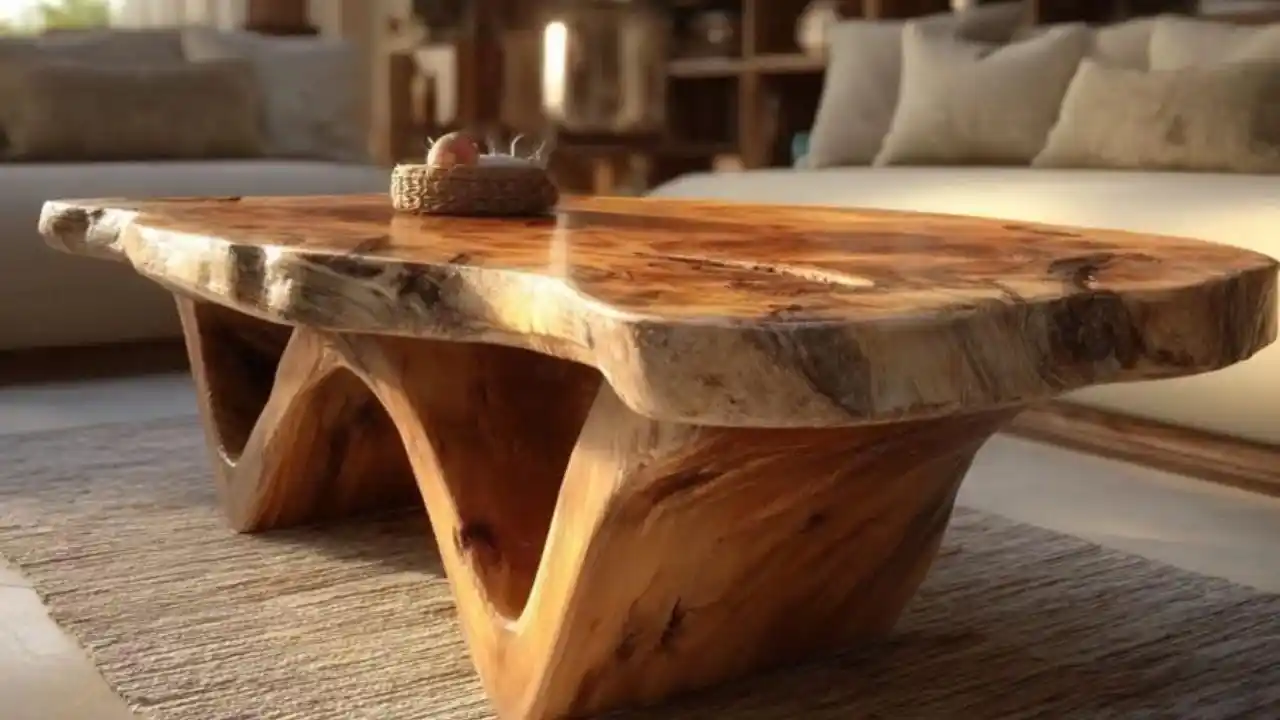
American living rooms bring together a wide range of interior styles, from relaxed farmhouse spaces to modern apartments and rustic cabins. While furniture choices vary, natural wood remains popular because it adds warmth, texture, and visual character.
Live edge coffee tables are a distinctive example. Their tabletops retain the natural contours of the original wood slab, creating an organic appearance that stands apart from conventional rectangular furniture. For homeowners looking for a piece with individual character, this style combines practical use with natural design.
Why Live Edge Coffee Tables Stand Out
The main feature of a live edge coffee table is its natural tabletop outline. Instead of cutting all sides into straight lines, the original tree edge remains visible along one or more sides.
This detail lets the wood’s shape influence the overall design. Some slabs have gentle curves, while others feature more pronounced contours. Grain patterns, knots, and natural colour changes also contribute to the finished table’s appearance.
Customers exploring live edge coffee tables can find styles that suit different interiors. A thick walnut slab may complement a rustic living room, while a lighter wood top with a slim metal base can work in a contemporary space.
Because natural slabs vary, no two tabletops have exactly the same combination of grain and edge shape.
Selecting Wood for the Desired Appearance
Wood species strongly influence a coffee table’s final look.
Walnut is known for its deep brown tones and distinctive grain, making it a suitable choice for interiors that need a rich natural accent. White oak offers a lighter colour palette and a pronounced grain structure. Ash has a relatively open grain appearance, while maple provides a cleaner and more subtle look.
Cherry is valued for its warm reddish-brown tones, and monkeypod can display varied grain patterns and attractive colour transitions.
The right choice depends on the customer’s preferred colour, interior style, and the appearance of the available slab. Reviewing actual wood samples or slab photos can help customers make a more informed decision.
Custom Dimensions for Different Living Spaces
A coffee table should fit the seating arrangement rather than occupy the centre of the room. A table that is too large can restrict movement, while a very small tabletop may look out of proportion beside a large sectional sofa.
Custom dimensions let you consider the tabletop’s length, width, and height in relation to the surrounding furniture. Customers can also discuss whether a rectangular, irregular, or more compact shape would work better in their living room.
This flexibility helps homes with unusual layouts, large seating areas, or specific design requirements.
Choosing Between Wooden and Metal Bases
The base plays an important role in defining the table’s overall style.
Wooden bases create a coordinated appearance, particularly when the tabletop and base use complementary wood tones. They often suit farmhouse, rustic, and traditional interiors.
Metal bases provide contrast against the natural slab. Depending on their shape and proportions, they can make the table appear more industrial or contemporary. Consider both wooden and metal bases during the custom design stage.
Finishes That Preserve the Character of Wood
The finish affects both the appearance and surface protection of a wooden coffee table.
Hardwax oil is a good option for customers who want to maintain a natural-looking surface and retain the wood’s tactile character. Polyurethane offers a different protective finish and can be selected based on the preferred surface appearance.
The right finish depends on the wood species, desired sheen, and the table’s intended use. Discuss these details before production rather than treating the finish as a last-minute decision.
Ordering Custom Furniture from Vietnam
Customers in the United States are not limited to furniture manufactured locally. International workshops can also produce made-to-order pieces based on specific material and design requirements.
At Tailor Wood Haven, customers can provide their preferred wood species, dimensions, tabletop shape, base style, and finish. The workshop prepares a product mockup for review before production begins. Once the customer approves the proposed design, manufacturing proceeds according to the agreed specifications.
Based in Hai Phong, Vietnam, Tailor Wood Haven accepts US orders and ships completed furniture from Vietnam to the United States.
For homeowners who appreciate natural materials and want more control over their furniture’s appearance, a custom live-edge coffee table can be a practical way to bring individual wood character into the living room.