

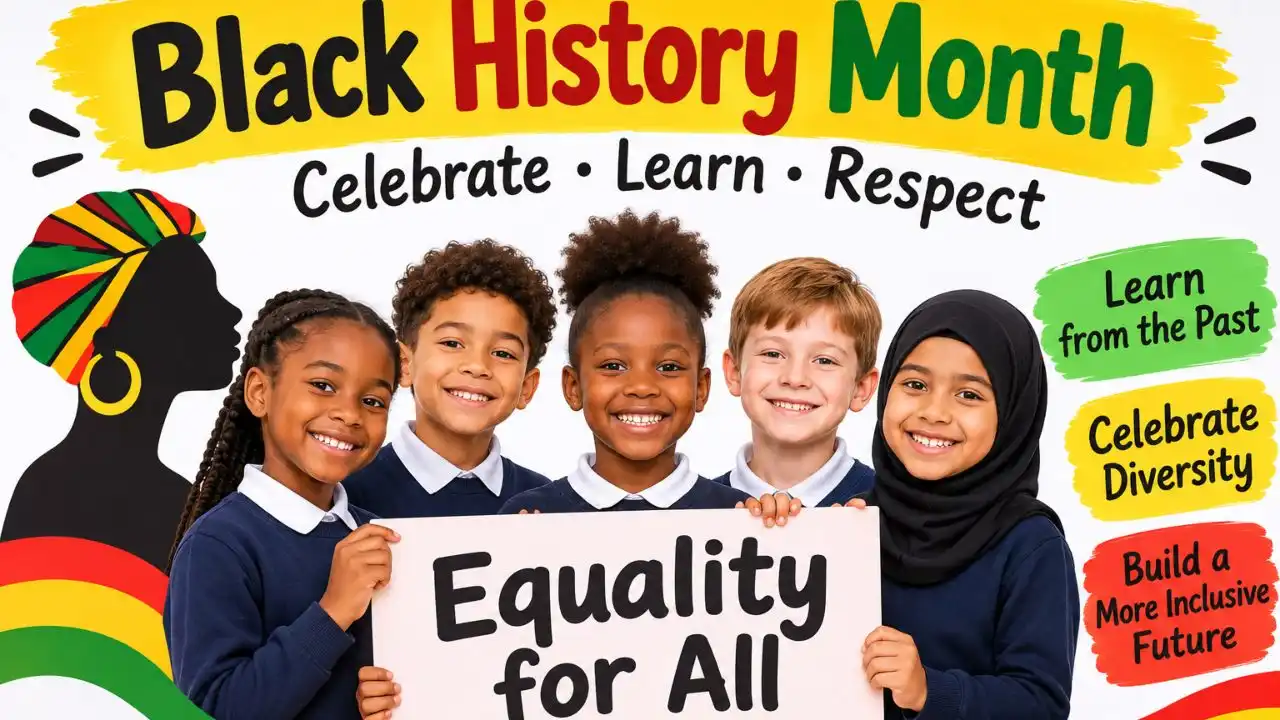
Black History Month is a great opportunity for schools to celebrate Black culture, recognise important achievements, and help students understand the history of equality. Using Black History Month posters in classrooms can make learning more interesting while encouraging children to explore inspiring stories, historical events, and influential people.
Teachers can use this month to create meaningful discussions about diversity, inclusion, and respect. With the right classroom activities and educational displays, students can learn about the contributions of Black individuals and understand why equal opportunities matter in today’s society.
Why Celebrate Black History Month in Schools?
Black History Month allows students to learn about people and events that may not always receive enough attention in everyday lessons. It helps children understand the struggles, achievements, and cultural contributions of Black communities throughout history.
Celebrating this month can help schools:
- Recognise important Black historical figures and their achievements.
- Encourage respect for different cultures and backgrounds.
- Teach students about racism, fairness, and equality.
- Build confidence and a sense of belonging among pupils.
- Create a more welcoming and inclusive learning environment.
These lessons should continue throughout the school year rather than being limited to one month.
Use Black History Month Posters to Inspire Students
Classroom displays are a simple way to introduce important historical topics and encourage students to learn independently. Black History Month posters can feature influential leaders, scientists, writers, athletes, artists, and activists who have made a lasting difference.
Teachers can include posters about:
- Historical figures: Learn about Martin Luther King Jr., Rosa Parks, and Nelson Mandela.
- Black inventors: Explore inventions and discoveries that have shaped everyday life.
- Writers and artists: Introduce students to important voices in literature, music, and visual arts.
- Civil rights movements: Explain the fight for equal rights and social justice.
- Modern achievements: Celebrate Black individuals making a difference in science, education, business, and sport.
Choose age-appropriate information and discuss the stories behind each display. This helps students understand more than just names and dates.
Plan Engaging Classroom Activities
Posters work best when teachers pair them with activities that let students take part in learning. Simple classroom tasks can make Black History Month more memorable.
Here are some ideas:
1. Create a History Timeline
Ask students to research important events in Black history and arrange them in chronological order. They can include pictures, short descriptions, and key dates.
2. Organise a Biography Project
Let each student choose an inspiring Black historical figure. They can prepare a short presentation explaining the person’s life, achievements, and influence.
3. Celebrate Black Culture
Explore traditional food, music, literature, art, and cultural celebrations from different communities. Encourage respectful discussion and learning.
4. Start Classroom Discussions
Ask open questions about fairness, equal rights, representation, and inclusion. Allow every student to share their thoughts.
Teach Equality Through Classroom Displays
Black History Month is also a useful time to discuss the importance of equal treatment and respect. An Equality Act 2010 poster can help teachers introduce equality in a simple, engaging way.
The Equality Act 2010 is an important UK law that protects people from discrimination based on protected characteristics, including race, disability, sex, and religion or belief.
Teachers can use classroom displays to explain:
- Why everyone deserves equal respect.
- What discrimination means.
- Why different backgrounds should be valued.
- How students can challenge unfair behaviour.
- The importance of creating safe and inclusive classrooms.
These lessons help children understand that equality is not just a historical topic. It matters in their everyday lives.
Make Classroom Displays More Meaningful
A good classroom display should attract attention while providing useful information. Teachers should choose educational resources that are clear, colourful, and suitable for their students’ age groups.
Consider these simple tips:
- Use short headings that are easy to understand.
- Include photographs and illustrations where appropriate.
- Combine historical information with interesting facts.
- Place displays where students can read them easily.
- Update classroom boards with new topics and student work.
Using educational posters alongside student-created projects can also make pupils feel more involved in the learning process.
Keep Diversity and Inclusion Part of Everyday Learning
Black History Month should encourage schools to continue teaching diversity and equality throughout the year. Students benefit when everyday lessons include different cultures, backgrounds, and achievements.
Teachers can introduce books by Black authors, discuss important historical contributions, celebrate cultural events, and use inclusive teaching resources across different subjects.
Regular classroom discussions also help children develop empathy, confidence, and respect for others.
Conclusion
Celebrating Black History Month in the classroom allows students to explore important history, recognise inspiring achievements, and understand the value of equality. Using Black History Month posters, educational activities, and an Equality Act 2010 poster can make these lessons more interesting and meaningful.
Schools can create welcoming learning spaces by choosing informative classroom displays that promote diversity, respect, and inclusion. With the right educational resources, teachers can help students appreciate different cultures and carry these important lessons into everyday life.