

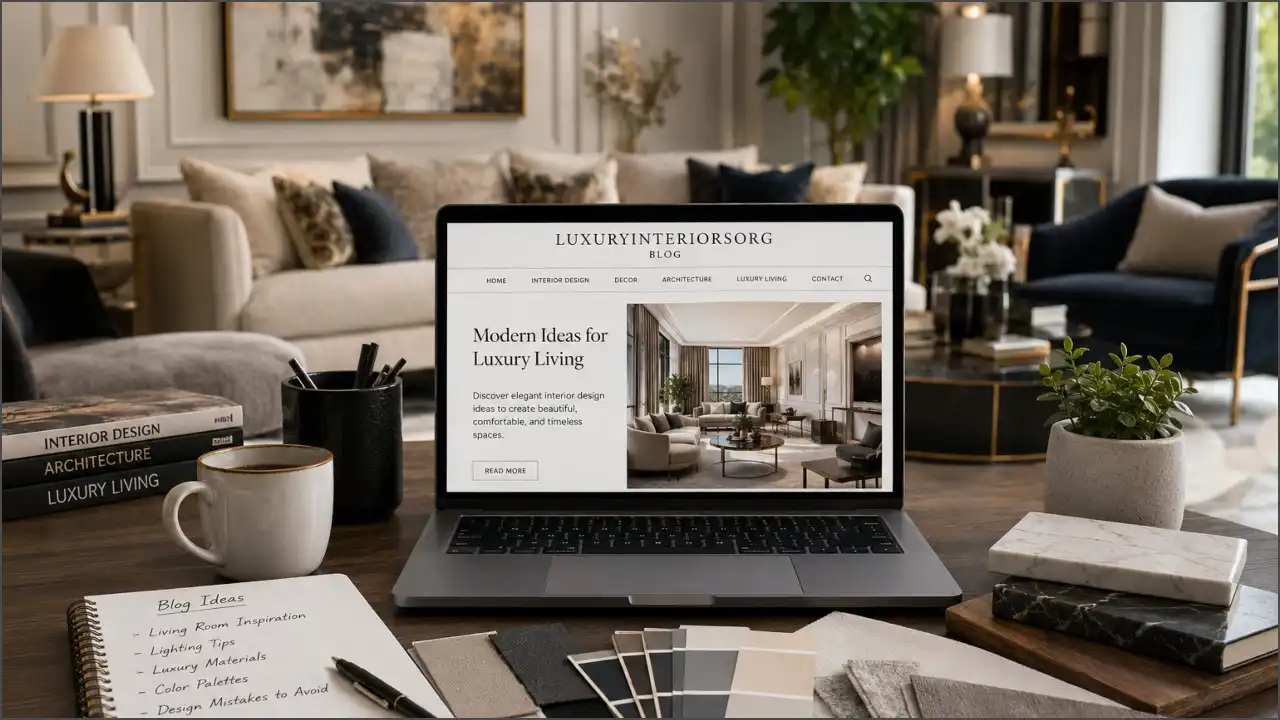
Writing about luxuryinteriorsorg blog requires more than describing beautiful rooms or listing expensive furniture. Readers interested in luxury interiors usually want ideas they can understand, compare, and eventually apply to their own homes. That means strong content should connect visual appeal with practical decisions such as layout, materials, lighting, comfort, maintenance, and budget.
LuxuryInteriors.org focuses on architecture, design, décor, and luxury living, making it a natural place for content that explores both style and function.
If you are planning an article for this type of audience, the goal should be simple: give readers a clear reason to keep reading and at least one useful idea they can take away.
Understand the Reader Before You Start Writing
The first step in writing about luxuryinteriorsorg blog content is identifying what the reader actually needs.
A homeowner searching for luxury bedroom ideas may want inspiration, while someone planning a renovation may need help choosing flooring, lighting, furniture, or finishes. A design enthusiast might simply want to understand current styles.
These readers have different needs, so the article should have a clear purpose.
Before drafting, ask:
- Is the article providing inspiration or solving a design problem?
- Does the reader need ideas, comparisons, or instructions?
- What decision could the reader make after reading it?
- Which details would be difficult to find in a basic article?
Those questions can prevent an otherwise attractive article from becoming vague.
Choose a Specific Interior Design Angle
Luxury interiors cover a huge subject. A focused article is usually more useful than a broad discussion of luxury design.
Instead of writing about “luxury home décor,” consider topics such as:
- How to create a sophisticated living room without overcrowding it
- Choosing natural stone for kitchens and bathrooms
- Lighting strategies for large open-plan spaces
- How to combine modern furniture with traditional architecture
- Ways to make a bedroom feel luxurious through texture
- Common mistakes when selecting oversized furniture
A specific angle gives the writer room to explain decisions rather than simply describe trends.
Go Beyond the Surface
A weak design article might say that marble, wood, brass, and layered lighting look luxurious.
A stronger article explains why they work and where they may create problems.
For example, polished stone can create a dramatic appearance, but it also requires the homeowner to consider maintenance, staining, slip resistance, and the amount of visual activity already present in the room.
That extra context is what makes design content useful.
Make Materials Part of the Story
When writing about luxury interiors, material selection deserves more attention than it often receives.
Readers benefit from practical comparisons between materials rather than endless descriptions of expensive finishes.
For example, an article about countertops could compare natural stone, porcelain, and engineered surfaces according to:
| Factor | What to Consider |
|---|---|
| Appearance | Veining, color, finish, and visual consistency |
| Maintenance | Cleaning requirements and sensitivity to stains |
| Durability | Resistance to heat, scratches, and everyday wear |
| Installation | Weight, cutting requirements, and professional fitting |
| Cost | Material price plus fabrication and installation |
This approach helps readers understand that luxury is not simply about choosing the most expensive option. A good material should suit the room and the way it will actually be used.
Explain Why Layout Matters
Furniture selection gets plenty of attention in interior design articles, but poor spatial planning can undermine even beautiful furniture.
When writing about a room, discuss movement and proportions.
A large sectional may look impressive in a showroom but overwhelm a smaller living room. Likewise, a beautiful dining table becomes impractical if chairs cannot be pulled back comfortably.
Useful articles should encourage readers to check:
- Walking routes
- Furniture scale
- Door and window clearance
- Sightlines
- Natural light
- Conversation areas
- Storage requirements
These details help transform inspiration into a workable design.
Use Lighting as a Design Tool
Lighting is another area where practical information can make an article stand out.
Rather than simply recommending chandeliers or decorative lamps, explain the role of different lighting layers.
Ambient lighting provides general illumination. Task lighting supports activities such as reading or food preparation. Accent lighting can draw attention to artwork, architectural details, shelving, or textured walls.
A luxury interior often benefits from combining these functions instead of depending on one central fixture.
For example, a dining room might use a decorative pendant above the table while additional ambient and accent lighting controls the atmosphere around the rest of the space.
Keep Luxury Connected to Comfort
One mistake writers can make is treating luxury as visual extravagance alone.
A room can contain expensive furniture and still feel uncomfortable. Good design considers how people sit, move, relax, work, entertain guests, and use storage.
When writing about luxuryinteriorsorg blog topics, discuss practical comfort alongside appearance.
Consider questions such as:
- Is the seating comfortable for extended use?
- Does the room have enough storage?
- Can the lighting change from daytime to evening?
- Are delicate materials appropriate for the household?
- Does the furniture arrangement support conversation?
These questions give readers advice they can use beyond the first impression.
Add Examples Without Inventing Experiences
Specific examples make design writing easier to understand, but writers should distinguish examples from claimed personal experience.
For instance:
“Imagine a neutral living room with a textured sofa, natural wood table, warm floor lamps, and one large artwork.”
That is a hypothetical example.
It is better than claiming that a particular client used the design successfully when there is no evidence for that story.
Transparency strengthens credibility. If a recommendation depends on room size, climate, maintenance needs, or budget, say so.
Avoid Turning the Article Into a Shopping List
Luxury design content can easily become a list of products and materials. That approach may look useful but often leaves readers without a decision-making framework.
Instead of simply naming ten furniture styles, explain how to choose between them.
For example, when selecting a sofa, discuss:
- Room dimensions
- Seating requirements
- Upholstery durability
- Cleaning needs
- Seat depth
- Color relationship with walls and flooring
- Delivery access
This turns a basic recommendation into practical guidance.
Build a Strong Article Structure
A well-organized article is easier to scan and easier to understand.
A useful structure for writing about luxuryinteriorsorg blog topics could be:
H1: Main topic and reader benefit
Introduction: Identify the reader’s problem or interest.
H2: Explain the design concept.
H2: Discuss practical considerations.
H3: Cover materials, lighting, layout, or furniture where relevant.
H2: Common mistakes
H2: Practical checklist or recommendations
FAQ: Answer specific reader questions.
Conclusion: Give the reader a clear next step.
This structure keeps the article focused instead of stretching one idea across unnecessary paragraphs.
Common Mistakes to Avoid
Several mistakes can reduce the value of luxury interior content.
Being too vague: Words such as “elegant” and “beautiful” do not explain what the reader should actually do.
Ignoring maintenance: Premium finishes still require cleaning and care.
Overloading rooms: Adding more expensive objects does not automatically create better design.
Copying trends without context: A trend should be evaluated according to the home’s architecture and the owner’s lifestyle.
Using unsupported claims: Avoid presenting personal results, professional credentials, statistics, or expert opinions unless they can be verified.
Forgetting the reader’s budget: Luxury can involve craftsmanship, proportion, durability, and thoughtful selection rather than simply a high price tag.
Conclusion
Successful writing about luxuryinteriorsorg blog content should help readers make better design decisions. Beautiful descriptions can attract attention, but practical details create lasting value.
Focus on specific topics, explain the reasoning behind design choices, compare materials honestly, consider comfort and maintenance, and use realistic examples without inventing experiences. That approach creates content that feels useful to homeowners and design enthusiasts while fitting the broader focus of LuxuryInteriors.org on architecture, décor, design, and refined living.