

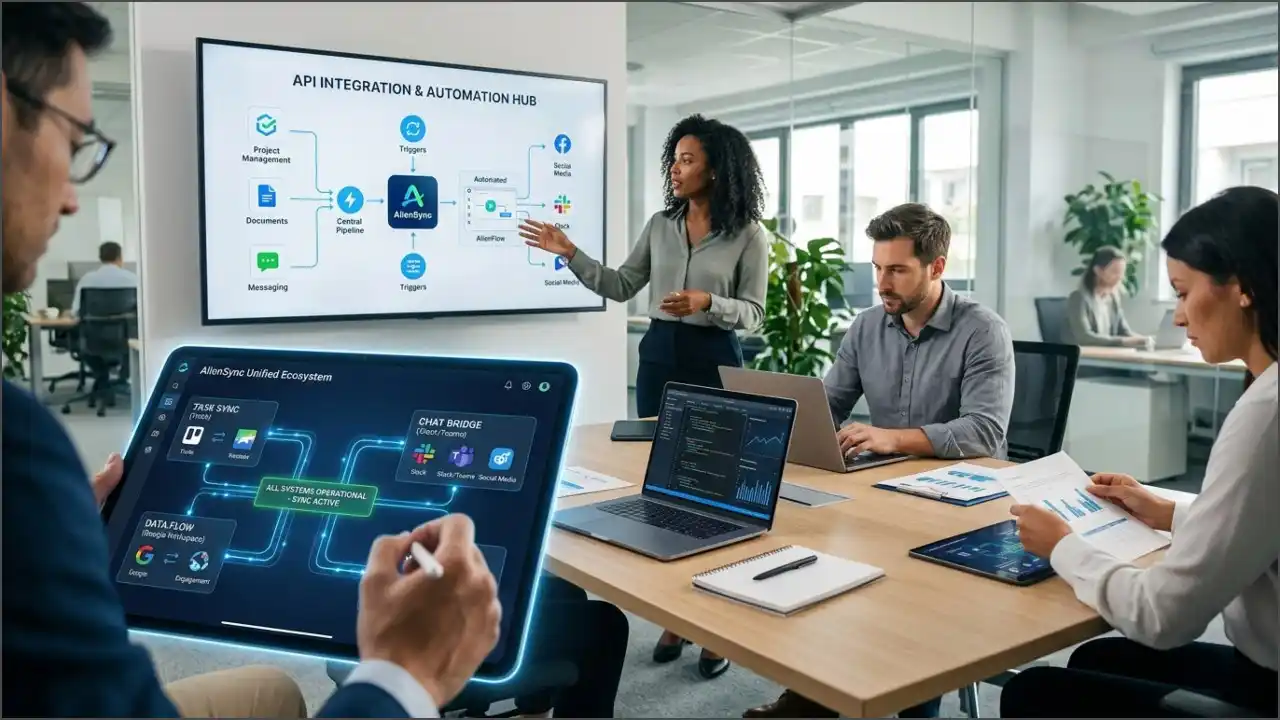
Managing digital tools in modern operations often feels fragmented. Teams routinely balance multiple platforms daily: project management boards, internal communication hubs, file repositories, and marketing distribution channels. Moving data manually across these applications drains focus, introduces errors, and creates persistent information silos.
The latest in tech from aliensync centers on unifying these disparate platforms into a cohesive digital workflow. Rather than requiring organizations to migrate away from existing software, contemporary integration models connect applications behind the scenes. This architecture allows information to flow across channels, databases, and dashboards without requiring repeated manual input.
Understanding the Integrated Architecture
At its core, this framework functions as an operational bridge between standalone applications. Instead of treating software as isolated environments, the ecosystem connects them through structured event triggers and direct data pipelines.
Four foundational components define how this architecture routes information:
-
The Core Sync Engine: A backend pipeline that listens for specific events—such as an updated task status, a new support ticket, or a published document—and pushes those updates across connected endpoints.
-
Unified Field Mapping: A standardization layer that converts data structures between platforms. This ensures that user records, timestamp formats, and attachment types match across different systems.
-
Cross-Platform Security Protocols: An authentication layer utilizing OAuth token management to maintain security standards while keeping services continuously linked.
-
Central Visibility Dashboards: A consolidated view aggregating system alerts, performance metrics, and activity logs into a single interface.
Primary Operational Pillars
Evaluating the latest in tech from aliensync requires examining how these structural components translate into everyday operational functions.
| Operational Pillar | Primary Focus | Practical Application |
| Application Integration | Linking core productivity and workspace applications. | Auto-syncing task boards, cloud documents, and chat records. |
| Channel Synchronization | Routing external communication into central databases. | Converting incoming messages directly into internal tickets. |
| Automated Workflows | Executing routine background operations based on system rules. | Triggering approvals, file archiving, and status alerts automatically. |
1. Workspace Application Alignment
Minimizing context switching remains a central goal of connected ecosystems. When a team member updates a spreadsheet, modifies a task card, or uploads a document, the background pipeline instantly reflects those changes across linked platforms. This eliminates the need to manually update multiple records.
2. External Communication Management
Customer feedback and external inquiries frequently get trapped inside isolated communication portals. Applying the latest in tech from aliensync allows organizations to pull external interactions—including support inquiries, social messages, and media engagements—directly into primary task management systems.
3. Event-Driven Automation Rules
Basic scheduling tools execute actions only at fixed intervals. Advanced sync frameworks operate continuously based on custom logical conditions. For example, if a creative asset is not marked approved within a project management board, the system automatically delays publication downstream and notifies the responsible editor.
Step-by-Step Implementation Framework
Deploying an integrated software pipeline requires a structured approach to avoid permission errors, duplicate records, or synchronization loops.
-
Audit Existing Digital Tools
Catalog every software product currently in active use across all departments. Identify functional overlaps, flag redundant subscriptions, and establish which tool serves as the primary authority for specific data types.
-
Configure Access Permissions
Establish token-based access rights across all targeted platforms. Follow the principle of least privilege, restricting read and write capabilities strictly to the folders, workspaces, or boards involved in the integration.
-
Establish Logical Triggers and Actions
Map out exact conditional rules for data movement. Define what constitutes a trigger (e.g., a card moving to a specific column) and specify the precise downstream action required (e.g., creating a calendar event or updating a channel summary).
-
Validate Pipeline Performance
Run initial tests using sample data before committing live operations to the sync network. Check that field mapping remains intact, evaluate response latency, and ensure that automated rules do not initiate recursive feedback loops.
Overcoming Common Integration Challenges
Even well-designed sync architectures encounter operational hurdles. Understanding these challenges ensures smoother deployment:
-
Trigger Overload: Deploying dozens of automated rules simultaneously can make diagnosing failures difficult. Build integrations incrementally, allowing each pipeline to run cleanly for several days before expanding.
-
Schema Mismatches: Connecting applications that use different data formatting rules can result in truncated entries or sync errors. Ensure field types align perfectly during initial mapping.
-
Unrestricted API Access: Granting broad workspace access to integration engines can expose sensitive internal data. Restrict API keys to dedicated service accounts with explicit boundary limits.
Long-Term Impact on Workflow Efficiency
Adopting the latest in tech from aliensync is fundamentally about making existing software resources operate as a unified ecosystem. By linking productivity apps, communication channels, and task management hubs into a continuous workflow, teams significantly reduce administrative friction. This approach ensures that updates remain consistent, errors are minimized, and operations stay aligned across the entire organization.