

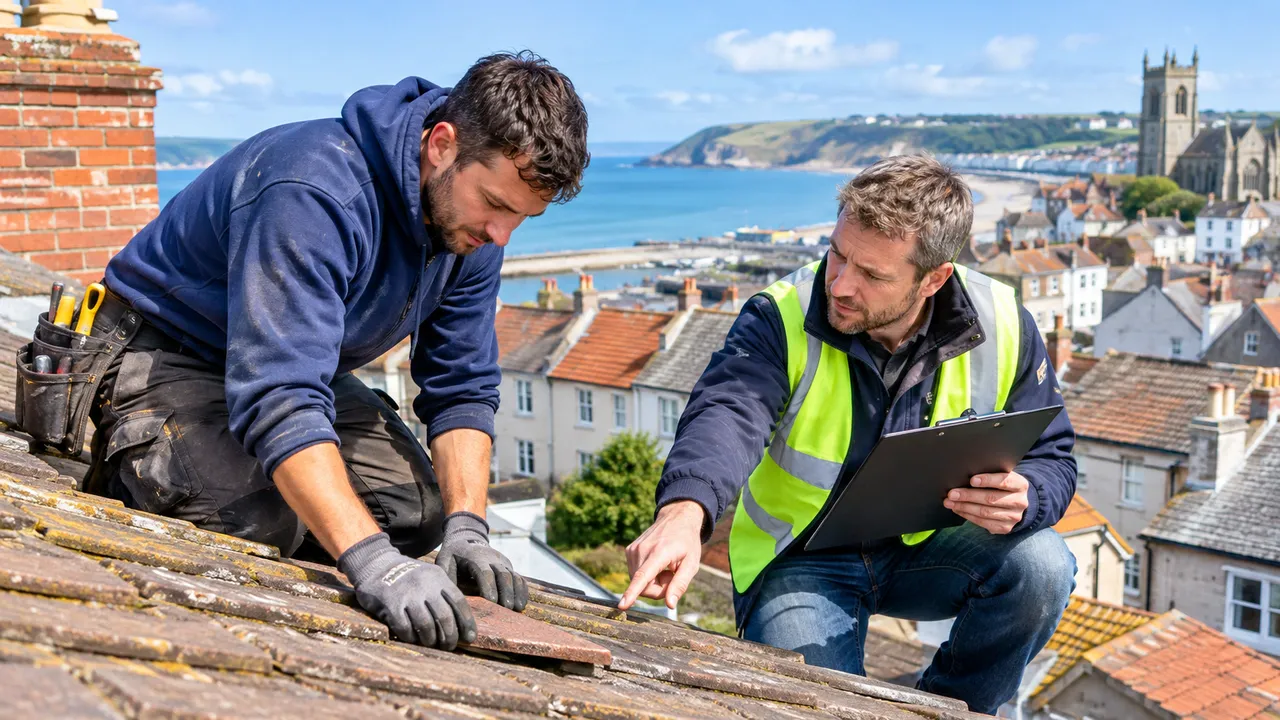
After a gale, two things often arrive close together: a wet patch in the loft and someone at the door who noticed a loose tile. One of those is useful. The other is how many people end up with a rushed repair, the wrong fixings, and a bill they can’t quite explain.
Hiring well matters more on this stretch of the coast than ten miles inland, because wind and salt quickly expose weak work. Here’s what to ask, what a fair quote should include, and what the usual jobs cost in 2026.
What a Serious Local Firm Will Actually Do
A proper visit is not a glance from the pavement and a price. It should include the loft as well as the covering, photos of the faults, and a written note on what’s failing and why. On a coastal roof, that usually means the ridges, the verges, the flashings and the edges, not just the middle of the slope, which can look fine while the perimeter is coming apart.
Ask how they will fix the work, not only what it will cost. Mortar-bedded ridges look neat and often fail early in salt-laden wind. Dry-fixed ridges and mechanical fixings to the current standard cost a little more and last much longer. If a quote doesn’t mention fixings at all, treat that as a gap, not a saving.
Please don’t get on the roof to write your own list for them. Point out the stain, the room, and when it gets worse. A decent roofer will do the climbing.
Materials That Last on This Coast
The same shower that would be ordinary inland arrives here with more wind, and salt sits on metal, mortar, and cheap flashings. That’s why a repair that would be perfectly adequate in a sheltered town can open up again after one winter on an exposed street.
When you speak to Roofers Weymouth, it’s reasonable to ask what they plan to use, and to see it on the quote: lead rather than felt at a chimney or an abutment, stainless or otherwise suitable fixings rather than ordinary nails, and a dry-fixed ridge if the old mortar has already failed. For flat roofs on bays, dormers and garages, ask whether they are patching a tired coating or replacing it with something that will actually stand the sun and the salt, such as EPDM or GRP.
Matching materials matter on the older streets as well. Georgian and early terraces towards the front, and houses in the Park District and Greenhill, are often in slate, sometimes under conservation rules. A concrete tile that “will do” is the wrong answer there, even if it is cheaper.
How to Read the Quote
A useful quote is slightly boring, and that’s a good thing. It should name:
- The work, slope by slope, not a single line that says “repair roof”
- The materials and the fixings
- Whether scaffold is included, and whether a pavement licence is likely
- What’s happening to the old materials, and whether a waste carrier licence is in place
- The programme, or at least whether the job is a day or a week
- The deposit, the balance, and what the guarantee actually covers
A deposit of 20 to 30 percent against a written quote is normal. Anything larger, or a request for cash in full before the work starts, is a reason to pause. Public liability insurance should be at least £2 million; ask for the certificate, not a verbal assurance. NFRC membership or TrustMark registration is a helpful sign, especially if you don’t already know the firm.
If one price is much lower than the others, it is usually because something has been left out: access, lead, a dry-fixed ridge, or the time to match the slates. Ask them to include those items or to explain why they aren’t needed.
What the Work Typically Costs
Typical 2026 prices for a two-storey house, including labour and materials. Exposure and access, particularly on a terrace facing the pavement or a house with a steep pitch, will move the figures.
- Inspection with photos, including the loft: £80 to £180, often deducted if you go ahead
- A few replacement slates or tiles from a roof ladder: £150 to £450
- Re-bedding a ridge: £400 to £1,000
- Dry-fixing a ridge: £500 to £1,400
- Verge repairs: £250 to £800
- Lead flashings at a chimney: £250 to £950
- Flat roof repairs on a small bay or garage: £400 to £1,800; a modest replacement in EPDM or GRP is often £1,200 to £3,500
- Full re-roof in tile or slate, average house: £7,000 to £14,000
- Scaffold: £600 to £1,800, more with a pavement licence
These are the numbers a fair quote should be near, not a price list you can hold someone to without a visit. The inspection is how you get from a range to a figure.
Streets, Exposure and Planning
Wyke Regis and the roads closer to open water take more of a battering than a street tucked further back. Postwar houses in Southill and Littlemoor are more often in concrete tiles, with their own habits at the ridges and the felt. Portland, just across the water, has heavier stone roofs that need a different touch.
If the house is listed or in a conservation area, and much of the centre of town is, check what Dorset Council will expect before anyone starts taking slates off. Matching materials are usually the right answer anyway, but it’s better to know before you accept a quote.
Storm Callers, Guarantees and a Quiet Decision
A temporary sheet after a blow is sometimes genuinely urgent. A same-day re-roof sold from the doorstep is not. Make the building safe, then choose a firm yourself, even if that means waiting a few days for a visit.
Guarantees are only as good as the paper and the company behind them. A year or two on a small repair is normal. A longer guarantee on a re-roof should say what is covered, what isn’t, and what happens if the firm isn’t there in ten years.
Roofers Weymouth will inspect the edges, the loft, and the covering, include the materials in the quote, and tell you whether it’s a local repair or a bigger job. That’s the visit you want, not the cheapest sentence on the doorstep.
If you need work done and you want a quote you can actually compare, get in touch with Roofers Weymouth.
For more information, visit our website.
Frequently Asked Questions
How much do roof repairs cost in Weymouth?
Small repairs from a roof ladder typically start at £150 to £450. Ridges, verges, chimneys and leadwork usually fall between £400 and £1,500, depending on access. A full re-roof on an average house is often £7,000 to £14,000. An inspection with photos is usually £80 to £180.
What should I ask a roofer before I hire them?
Ask to see proof of insurance, a written specification of materials and fixings, whether the ridge will be dry-fixed, the deposit amount, and what the guarantee covers. On this coast, also ask what they use instead of ordinary nails and felt flashings. Photos of recent work on streets like yours are more useful than a general brochure.
Do I need to accept a doorstep quote after a storm?
No. You may need the roof sheeted to keep the weather out. You don’t need to appoint the same caller for the permanent repair. Find your own firm, compare written quotes, and be cautious of anyone who wants a large cash deposit the same day.
Do I need planning permission for roof work?
Like-for-like repairs and re-roofing on an ordinary house usually don’t require planning permission. Listed buildings, conservation areas and a change of shape or material can. Dorset Council is the planning authority, and a decent roofer will help you check before work starts.
Why do quotes for the same roof differ so much?
They may not include the same access, materials or scope. One quote might re-bed a ridge in mortar; another might dry-fix it and renew the flashings. Compare the specification first. A much cheaper quote that leaves the fixings and the lead unnamed is often the more expensive one a year later.