

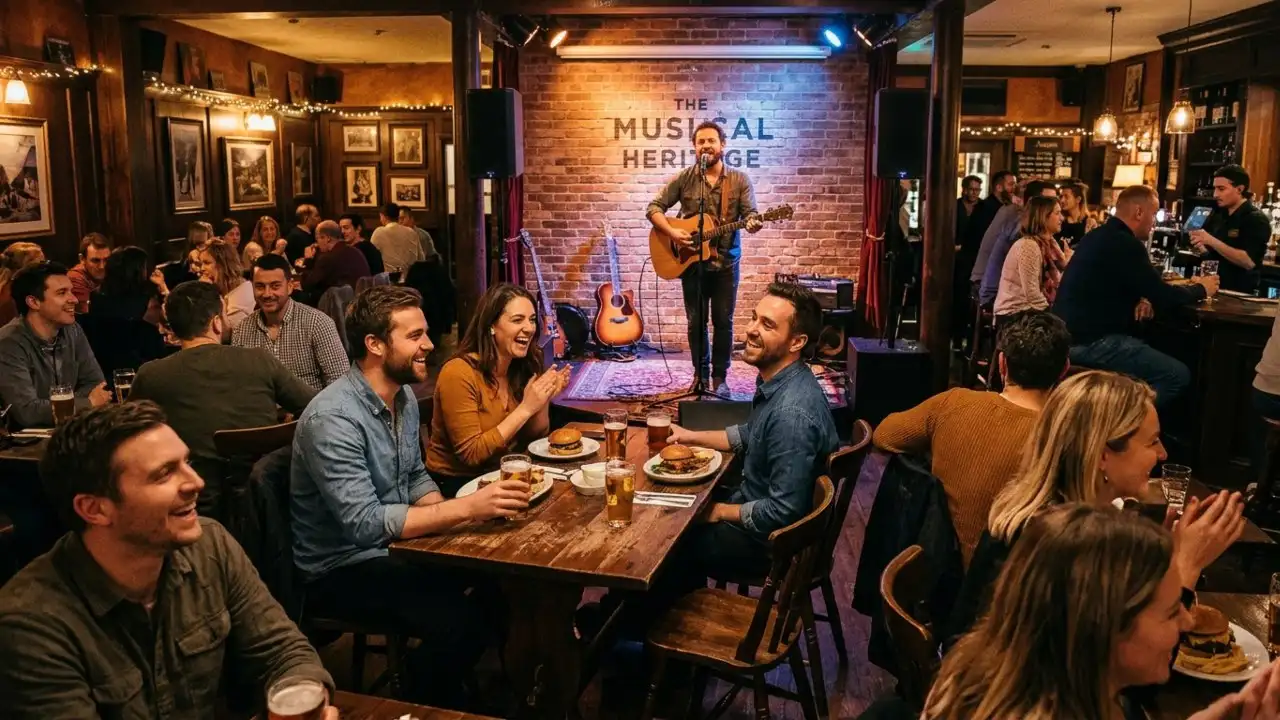
DDFK Oompah Band has performed at pubs, hospitality venues, festivals, corporate events and private celebrations across the UK, and one thing becomes obvious very quickly: live music can completely change how people experience a venue. It is not simply about putting musicians in a corner and hoping guests enjoy the songs. The right performance can change the energy of the room, create interaction between tables and give customers something they remember after they leave.
For pubs and restaurants, that can be especially valuable. Food and drink may bring people through the door, but atmosphere often helps determine whether an ordinary evening feels worth repeating.
Live Music Can Turn a Normal Evening Into an Event
A Thursday evening at a pub or restaurant is usually competing with dozens of other places offering similar food, drinks and prices.
Live entertainment can give people another reason to choose one venue over another.
Instead of simply booking a table for dinner or meeting friends for drinks, guests feel as though something is actually happening that evening.
That distinction matters.
A venue might use live music for a weekend event, seasonal celebration, beer festival, corporate gathering, private booking, Christmas party or themed evening.
The strongest results usually come when the entertainment fits naturally into what the venue is already trying to create.
The Right Music Should Fit the Room
There is no single type of live music that works for every hospitality venue.
A restaurant built around relaxed dining may want musicians who can add atmosphere without making conversation difficult. A lively pub or beer hall may want almost the opposite: music that gets people singing, moving and interacting with other tables.
The question is not simply, “Is this a good band?”
It is, “Is this the right band for this room, this audience and this point in the evening?”
That distinction can prevent a lot of poor entertainment choices.
Interaction Often Matters More Than Volume
Memorable entertainment does not have to mean louder entertainment.
In many venues, interaction matters more than volume.
Guests tend to remember a musician stopping at their table, a spontaneous singalong, a birthday being acknowledged or an entire section of the room suddenly joining the same song.
That is one reason a roaming Oompah band can work well in pubs and hospitality venues.
Instead of expecting everyone to face a stage, the musicians can move between tables and different areas of the venue. That allows the performance to reach people who may never walk over to a traditional dance floor or stage area.
It also gives performers an opportunity to read the room.
If one group wants to participate, they can engage more directly. If another table simply wants to watch, the band can keep moving.
Music Can Give People a Reason to Stay
There is usually a point during an evening when guests decide whether to order another drink, continue socialising or head somewhere else.
Atmosphere can influence that decision.
If diners have finished eating but the venue still feels lively, they may choose to remain for another drink. In pubs, live entertainment can help prevent the room from feeling flat between busy periods.
This does not mean trying to keep every table occupied for as long as possible. Restaurants still need to manage reservations and table turnover.
But in venues with bars, standing areas or flexible seating, entertainment can extend the evening naturally.
People stay because they are enjoying themselves.
The Band Can Become Part of the Venue’s Identity
Food menus can be copied.
Drink promotions can be copied.
Even interior-design ideas get copied surprisingly quickly.
A distinctive atmosphere is harder to reproduce.
Regular live entertainment can become part of the identity people associate with a particular pub or restaurant.
Customers might start thinking of a venue as “the place with the live brass band on Fridays” or “the pub that does the brilliant German night.”
This is particularly useful for themed hospitality events.
A German and Bavarian-style live band can support a Bierkeller evening, Oktoberfest event or beer festival in a way that goes beyond simply playing German songs through a speaker.
The musicians become part of the experience itself.
Think About Where the Musicians Will Actually Go
Entertainment planning should begin with the physical venue.
Before confirming a band, look at the room while imagining it full of customers, tables, serving staff and drinks.
Where will the musicians perform?
Can staff still move easily?
Will diners near the band be able to talk?
Is there a dedicated stage, or would a roaming performance make more sense?
Where are the entrances, toilets and service routes?
These details sound basic, but they can determine whether a performance feels effortless or awkward.
One advantage of roaming entertainment is that a venue may not need to sacrifice a large section of usable floor space for a permanent stage.
Work Around Food Service, Not Against It
Timing matters enormously in restaurants.
An energetic performance might be excellent at 9:30 PM and completely wrong at 7:30 PM if most guests are halfway through their main course.
Entertainment should work around the rhythm of the venue.
A restaurant might keep the beginning of the evening relatively relaxed, allow time for the main food service and increase the energy later.
A pub may do the opposite and use music early to build atmosphere before the busiest part of the night.
DDFK often has to adapt around the event rather than expecting the event to adapt around the musicians.
That flexibility is important because hospitality venues have far more moving parts than a conventional concert.
Do Not Forget the Staff Experience
Customers are not the only people affected by live entertainment.
Bar staff, waiting staff, security teams and managers still need to do their jobs while the music is happening.
A band blocking the main route between the kitchen and dining room is going to create problems regardless of how good the performance is.
The same applies to excessive sound near ordering points or musicians occupying areas needed for serving drinks.
Good entertainment planning should therefore involve the venue team, not just the person booking the act.
Ask the manager where the pressure points are before deciding how and where the performance should happen.
Not Every Guest Wants to Participate
Interactive entertainment works because participation feels spontaneous.
It stops working when people feel forced into it.
Some guests will happily sing, dance or become part of the performance. Others will prefer to watch from their table.
A professional band should be able to recognise the difference.
This is especially important in restaurants, where different groups may be visiting for completely different reasons on the same evening.
One table might be celebrating a birthday. Another might be having a quiet dinner.
Good performers can create energy around the first group without making the second feel uncomfortable.
Give the Evening a Beginning, Middle and End
Live music works better when there is some structure.
Rather than simply asking a band to “play for three hours,” think about how the entertainment should develop.
The evening may begin with guests arriving and ordering drinks, move into food service, become more energetic after dinner and finish with the liveliest part of the performance.
Breaks can also be useful.
They allow guests to talk, staff to reset parts of the room and musicians to return with renewed energy.
The goal is not constant noise.
The goal is to make each part of the evening feel intentional.
Ask Practical Questions Before Booking
Before committing to a live act, hospitality venues should establish the practical details clearly:
- How much space does the band require?
- Do they need a fixed stage?
- Can they perform while roaming?
- What power or sound equipment is required?
- How long are the sets?
- How many breaks are needed?
- Can timings change around food service?
- Can they perform outdoors?
- What happens if the venue has sound restrictions?
- Can the performance style be adjusted for a quieter or livelier audience?
A professional band should be able to answer these questions before the event rather than discovering problems on the night.
Live Entertainment Should Add to the Venue, Not Take It Over
The most successful hospitality entertainment usually does not feel separate from the venue.
It feels like part of the evening.
The food is still important. The drinks are still important. Staff still need to provide good service.
Live music should strengthen those things rather than compete with them.
From DDFK’s experience performing in different types of UK venues and events, the strongest reaction often comes when performers understand when to take attention and when to give the room space.
Sometimes that means a full crowd singalong.
Sometimes it means moving to another table.
Sometimes it means simply letting people enjoy the music while they finish their drinks.
A Memorable Venue Is More Than Its Menu
People do not always remember every detail of an evening out.
They may forget exactly what time dinner arrived or which table they were sitting at.
They are much more likely to remember a moment.
Perhaps the musicians suddenly appeared beside their table. Maybe everyone in the room started singing together. Maybe a normal night at the pub unexpectedly turned into something they talked about the following morning.
That is where live entertainment has real value for hospitality venues.
DDFK Oompah Band’s approach is built around creating those shared moments rather than simply playing through a set list. For pubs and restaurants considering live music, the same principle is a useful starting point: choose entertainment that helps guests experience the venue, not just hear it.
For more informative articles, visit our site daily.